AI Chatbots in Action: Real-World Use Cases Transforming Multiple Industries

Sephora boosted bookings by 11%. Bank of America’s chatbot completed 3 billion interactions. Georgia State University retained 324 at-risk students.
These aren’t isolated wins. They’re proof that AI chatbot use cases are delivering measurable results across industries today.
As businesses face pressure to do more with less, conversational AI has evolved from novelty to necessity. Modern chatbots powered by natural language processing and machine learning are automating support, qualifying leads, and engaging customers around the clock.
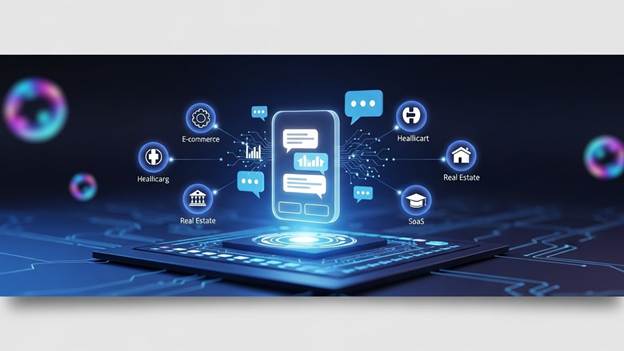
This guide explores 13 proven AI chatbot use cases across six industries, showing exactly how organizations achieve ROI within 12 months.
Why Businesses Deploy AI Chatbots
Instant Scalability: AI-powered systems handle thousands of simultaneous conversations, drastically reducing costs while providing 24/7 support.
Quick ROI: Most companies achieve full return on investment within 12 months.
Better Understanding: Today’s chatbots use generative AI to detect sentiment, understand context, and handle complex queries that previously required human agents.
E-Commerce: Two Essential AI Chatbot Use Cases
Online retailers use chatbots to reduce cart abandonment and increase conversions. These are some of the most profitable AI chatbot use cases in digital commerce.
1. Personalized Product Recommendations
AI chatbots analyze browsing history and past purchases to suggest relevant products. They guide shoppers through product catalogs based on preferences and budget.
2. Abandoned Cart Recovery
Chatbots send timely reminders to customers who left items in their cart. They offer personalized incentives and answer last-minute questions that prevent purchase completion.
Real Example: Sephora’s Success
Sephora’s Facebook Messenger chatbot provides personalized beauty consultations by accessing customer purchase history.
The result? An 11% increase in store appointment bookings while handling routine product questions.
![Sephora chatbot interface showing personalized recommendations]
Healthcare: Three Critical AI Chatbot Use Cases
Healthcare providers face overwhelming patient inquiries daily. Chatbots help bridge the gap between limited staff and unlimited patient needs.
3. 24/7 Appointment Scheduling
Patients book, reschedule, or cancel appointments anytime without waiting on hold. Chatbots sync with provider calendars and send automated reminders.
4. Preliminary Symptom Checking
AI chatbots conduct initial health assessments before physician consultations. They triage patients based on symptom severity and urgency.
5. Medication Reminders
Chatbots send timely medication alerts and track adherence patterns. They help patients stay on treatment plans and request refills automatically.
Real Example: Babylon Health
Babylon Health’s AI chatbot conducts preliminary medical consultations for over 10 million registered users globally. The system handles routine queries while escalating complex cases to physicians.
![Babylon Health chatbot screening symptoms]
Banking: Two High-Impact AI Chatbot Use Cases
Financial institutions process millions of daily queries while maintaining strict security standards. AI chatbot use cases in banking focus on both efficiency and compliance.
6. Account Inquiries and Transaction History
Customers check balances, review transactions, and download statements through conversational interfaces. Chatbots provide instant access without app navigation or phone calls.
7. Personalized Financial Recommendations
AI analyzes spending patterns to suggest savings opportunities. Chatbots proactively alert customers to unusual charges and potential fraud.
Real Example: Bank of America’s Erica
Bank of America’s Erica serves over 20 million active users with 3 billion+ interactions completed. The AI assistant identifies spending patterns and suggests savings opportunities. Call center volume dropped by approximately 20%.
![Bank of America’s Erica chatbot interface]
Real Estate: Two Game-Changing AI Chatbot Use Cases
Real estate agents used to waste hours on prospects who never converted. Smart chatbots now qualify leads immediately through targeted conversations.
8. Instant Lead Qualification
Chatbots engage website visitors within seconds, asking targeted questions about budget, location, and timeline. They score leads based on responses and prioritize serious buyers.
9. Automated Tour Scheduling
Bots sync with agent calendars to book property viewings instantly. They send confirmations, reminders, and directions to potential buyers.
Real Example: Zillow’s Results
Zillow deploys chatbots that engage visitors within seconds, asking targeted questions about budget, location, and timeline. These systems increase qualified lead generation by approximately 35%.
![Zillow chatbot qualifying buyers]
Education: Two Essential AI Chatbot Use Cases
Universities use chatbots to handle administrative tasks and provide instant academic guidance. These AI chatbot use cases reduce staff workload while improving student experience.
10. Enrollment and Registration Assistance
Chatbots guide students through course selection, registration deadlines, and financial aid applications. They answer common questions about degree requirements instantly.
11. Student Retention Support
AI sends personalized reminders about important deadlines and resources. Chatbots identify at-risk students and connect them with support services proactively.
Real Example: Georgia State University
Georgia State deployed Pounce, an AI chatbot sending personalized text reminders about registration, financial aid, and orientation.
The impact? Pounce reduced “summer melt”—enrolled students who don’t show up—by 21%. This translated to 324 additional students attending classes.
![Georgia State’s Pounce chatbot conversation]
SaaS: Two Critical AI Chatbot Use Cases
Software companies face a unique challenge. Complex products require extensive onboarding, but users expect instant help.
12. Interactive Product Onboarding
Chatbots guide new users through initial setup and key features. They provide step-by-step tutorials customized to user roles and goals.
13. Automated Technical Support
AI handles common troubleshooting questions and searches knowledge bases instantly. For complex issues, chatbots create support tickets with full context for human agents.
Real Example: Slack’s Onboarding
Slack implements AI chatbots that guide new users through setup and surface relevant features based on usage patterns. These bots reduce time-to-value by approximately 35% and decrease basic support tickets by 25%.
![Slack chatbot guiding user setup]
What Makes AI Chatbot Use Cases Successful
Smart Qualification: They identify purchase intent through conversation patterns and automatically score prospects.
Immediate Engagement: Businesses engaging visitors within 60 seconds see dramatically higher conversion rates.
Global Availability: Virtual assistants work continuously across all time zones.
Continuous Learning: Machine learning systems analyze conversation data to identify friction points. For teams managing interactions, effective team collaboration ensures insights are shared across departments.
Choosing the Right Solution
Integration Capabilities: Ensure seamless connection with your existing CRM and support platforms.
NLP Accuracy: Test natural language processing with your industry’s specific terminology and complex queries.
Compliance Requirements: Verify data privacy standards, especially for healthcare, finance, and GDPR compliance.
Scalability: Choose solutions that handle traffic spikes without performance degradation.
Key Metrics to Track
- Average response and resolution time
- Containment rate (queries resolved without human help)
- Customer satisfaction scores
- Conversion rates through chatbot conversations
- Cost per interaction versus human-handled queries
Getting Started
Identify your highest-volume customer inquiries or biggest operational bottlenecks. Deploy a chatbot for those specific AI chatbot use cases first. Measure results, then expand strategically.
Three priorities:
- Choose technology with strong natural language processing
- Ensure seamless integration with existing systems
- Maintain compliance with industry regulations
The Future of AI Chatbot Use Cases
From Sephora boosting appointments to Georgia State retaining students, these 13 AI chatbot use cases deliver tangible business outcomes.
Whether you’re reducing support costs, qualifying leads, or improving satisfaction, successful implementation starts with choosing the right use case for your business.
Companies implementing proven AI chatbot use cases today are building competitive advantages that will compound for years.